Lenovo today announced more choice for consumers with the expansion of
its popular YOGA line of tablets with the new YOGA Tablet 2. Consumers
can now for the first time choose Windows models, available in 8-in and
10-in sizes. Lenovo is also offering new Android models in 8-in and
10-in models with the new 13-in YOGA Tablet 2 Pro.
With even more features that adapt to users like the new Hang mode and
improved kickstand, these tablets give consumers a new way to do more of
the things they love. Designed for today's mobile and digital
lifestyles, they feature captivating audio, high resolution cameras,
Intel Atom processors and dual band speed WiFi with optional 4G1
supported by the Intel XMM 7160 modem.
A New Way to Do More
The new YOGA Tablet 2 models focus on technology that adapts to users,
making computing intuitive and fun. Still thin and light in all sizes,
the tablets provide a new level of flexibility starting with the new
Hang mode. Users can still enjoy the three original modes - Hold, Tilt
and Stand - and now discover a fourth mode - Hang - that lets them hang
their device to display content. Responding to customer feedback, Lenovo
also improved the kickstand in Stand mode for more stability when
pressing the 10-point multitouch screen.
In addition to the tablet's responsive design, its performance specs got
an upgrade. An Intel Atom processor supports the enhanced sound and
camera features consisting of dual front speakers with cinematic Dolby
Audio and Wolfson Master HiFi for clear sound with an 8 MP rear camera.
The tablets also sport a number of useful features for connectivity with
dual band WiFi and a micro USB with OTG connection that lets users
charge their phone (requires separate cable). Additionally, users can
enjoy extra long battery life for staying mobile longer in any of its
four modes.
Designed for Choice
The YOGA Tablet 2 comes in three screen sizes and two operating systems
so users can choose the model that's right for them. For those who like
the familiarity and productivity of Windows, Lenovo offers the YOGA
Tablet 2 with Windows in Ebony-colored 8-in and 10-in models. They come
with Microsoft Office 365 preloaded (1-year subscription) and with
optional 4G on the 10-in model.
For those who prefer Android, Lenovo created the YOGA Tablet 2 in 8 and
10-inches as well as the new YOGA Tablet 2 Pro (see separate press
release) in 13-in running Android 4.4 Kit Kat in Platinum. For staying
connected virtually anywhere, all the Android models offer optional 4G1.
These models come with Lenovo Premium Apps that let users easily share,
sync and protect precious information on their tablet. SHAREit shares
information instantly between multiple devices without network charges,
and SYNCit backs up and restores contacts, SMS messages and call logs.
"Our second generation YOGA Tablets give users the freedom to do more -
go hands free and hang the tablet from the wall with the new Hang mode;
get unparalleled sound on a tablet with loaded audio features; and
choose the operating system that's right for them - Android or Windows,"
said Jeff Meredith, vice president, Marketing, Lenovo Mobile Business
Group. "Also for those who crave multimedia on a bigger screen, we've
created a new 13-in model with the YOGA Tablet 2 Pro. So all in all, the
tablets give you more modes, more performance and more choice."
"With consumers being increasingly tech-savvy with tablets, they require
more choices to meet their different needs. We are proud to support
Lenovo in fulfilling these varying needs by providing lightning fast
performance and long battery life through our Intel Atom processor,
whether it is an Android or Windows-based tablet, or what the screen
size and special features the tablet offers. Our Intel XMM 7160 modem is
also providing consumers the option of ultra-fast 4G connectivity for
their tablets," said Erik Reid, vice president of Intel Mobile and
Communications Group and general manager of the Tablet Business Unit.
Pricing and Availability
The YOGA Tablet 2 10-in and 8-in Android models are available beginning
Oct. 9. Models start at $299.99 and $249.99, respectively.
Eurocom is launching the thin and light, M5 Pro with a choice NVIDIA
GeForce GTX 980M and 970M graphics, 32 GB DDR3-1600 memory, 4 TB
storage, a stunning 4k (3840x2160) 15.6" display and an Intel Core i7
4710HQ processor. If there was ever a laptop that could blur the lines
between ultraportable and gaming it would be the EUROCOM M5 Pro,
powerful enough to run current and future games at ultra with the
weight, dimensions and battery life of an ultraportable.
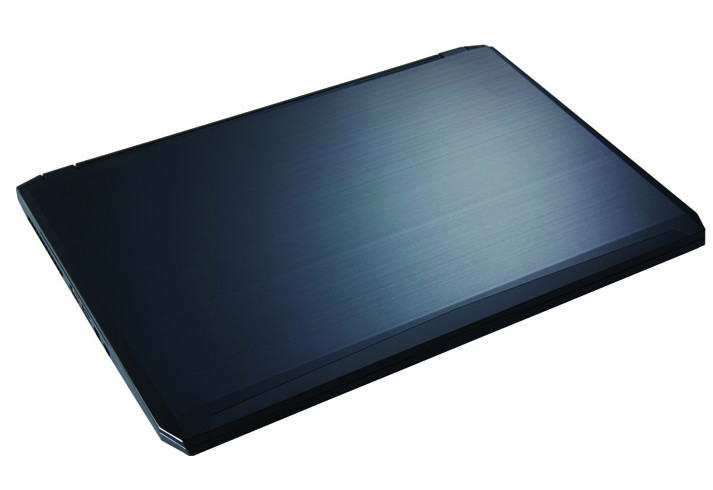
The EUROCOM M5 Pro is Eurocom's newest innovative creation. A
lightweight 2.6kg laptop with superb performance. It is powered by the
next generation of world's most powerful NVIDIA GeForce GTX 980M and
970M graphics and features a beautiful 4K, 3840-by-2160 pixels display.
The EUROCOM M5 Pro is extremely thin and mobile while still offering a
stunning 4TB of storage with four physical drives with a combination of
traditional SSD/HDD as well as new, innovative M.2 slots. Sleek, slim,
super high performance, the M5 is another "little monster" from Eurocom
that will blow everybody away, while gaming or doing your corporate
bidding.
Graphics Technology - NVIDIA GeForce GTX 980M and 970M
The EUROCOM M5 Pro supports both NVIDIA GeForce GTX 980M (4GB DDR5) or
GTX 970M (3GB DDR5) graphics for unbeatable performance, raw power and
great battery life.
The NVIDIA GeForce GTX 980M's 1536 CUDA cores, running at 1038 MHz and 8
GB of GDDR5 memory running at 2500 MHz offers 50% faster performance
than the previous generation NVIDIA GeForce GTX 880M.
Experience great notebook graphics performance with next generation
NVIDIA GeForce GTX 980M and 970M Maxwell graphics for advanced
performance, unmatched power efficiency and cutting edge features.
15.6-inch 4K Display
The EUROCOM M5 Pro supports a beautiful 15.6-inch 4K 3840-by-2160
display as well as a FHD 1920-by-1080 matte display. The high pixel
density of the 4K display with 8,294,400 pixels provides extremely
detailed images for true to life content. Eurocom also offers
professional colour calibration services to ensure every one of those 8
million pixels are accurate as possible.
Aluminum Alloy Chassis
An Aluminum Alloy Chassis is used to offer a durable, rugged yet classy
look while offering a very lightweight and strong 2.6 kg case that is
just one inch thick. The Aluminum also provides heat sink qualities,
which allowed Eurocom to put such high performance NVIDIA GeForce GTX
980M and 970M graphics and other components inside the M5 Pro.
Storage
The EUROCOM M5 Pro supports four physical drives by way of two optional
M.2 2280 SSDs and one 7.5 mm and one 9 mm storage bays, with RAID 0/1
support.
A fast and powerful M.2 2280 SSD is ideal for Intel's Smart Response
SSD-caching and Intel Rapid Start technology. Intel Smart Response is an
intelligent caching setup that monitors data reads and writes on your
system drive and caches the most frequently accessed data to an SSD.
This results in a significant speed boost, as the data is ready for when
your system needs it. RAID 0/1is also supported for increased
performance or redundancy. Intel Rapid Start Technology enables systems
to quickly resume from deep sleep in about 6 seconds.
Intel Core i7 4710HQ Processor
The EUROCOM M5 Pro has an Intel HM87 Express Chipset running the Intel
Core i7 4710HQ processor with 4 cores, 8 threads running at 2.5 GHz with
integrated Intel HD Graphics 4600. Due to Hyperthreading, the four
cores can handle up to eight threads in parallel leading to better
overall utilization of the CPU. The i7-4710HQ is rated at a TDP of 47 W
including graphics card and memory controller.
Memory
The EUROCOM M5 Pro has 4 memory slots ready for up to 32 GB of dual
channel DDR3 1600MHz or 1866 MHz 204 pin SODIMM. With such massive
amounts of RAM available, the M5 Pro becomes a flexible tool for
virtualization and high performance computing. Being fully upgradeable
the EUROCOM M5 Pro supports 8 GB, 16 GB, 24 GB and 32 GB of memory via 4
or 8 GB modules.
Full size backlit Keyboard
The EUROCOM M5 Pro comes with a full size backlit keyboard with separate
numeric keypad. The adjustable white backlit keys help to increase
usability in dim lighting conditions by ensuring users can see the
keyboard in nearly any environment, while also hinting at the epic power
under the hood.
Power and Battery
All features in the EUROCOM M5 Pro are powered by a 180W AC adapter so
the M5 Pro is ready to handle any workload. With a removable 4-cell 60
WH Polymer battery, the M5 Pro can deliver up to 3.3 hours of full power
battery life.
Today SteelSeries, the leading global manufacturer of gaming
peripherals, announced the all new Siberia headset family. With the
introduction of these six new Siberia headsets, SteelSeries now delivers
the most comprehensive suite of gaming audio solutions to fit the needs
of any gamer. Each Siberia headset is built on SteelSeries
world-leading standards for amazing comfort, great audio and
breakthrough design. But the breadth of this new range allows each and
every gamer to unlock amazing new experiences tailored to exactly what
the gamer is looking for in a gaming headset.
"For us, Siberia is the definition of what gaming audio looks, feels and
sounds like. When it was first introduced, Siberia delivered a sense of
style that was unique to what was typically expected from gaming audio.
It produced exactly what was, and is necessary -
'forget-that-you're-wearing-it' comfort and great sound," said Tino
Soelberg, SteelSeries CTO. "The new Siberia family takes this foundation
and extends it into a full product range that delivers an incredibly
awesome audio experience for the gamer in everyone"
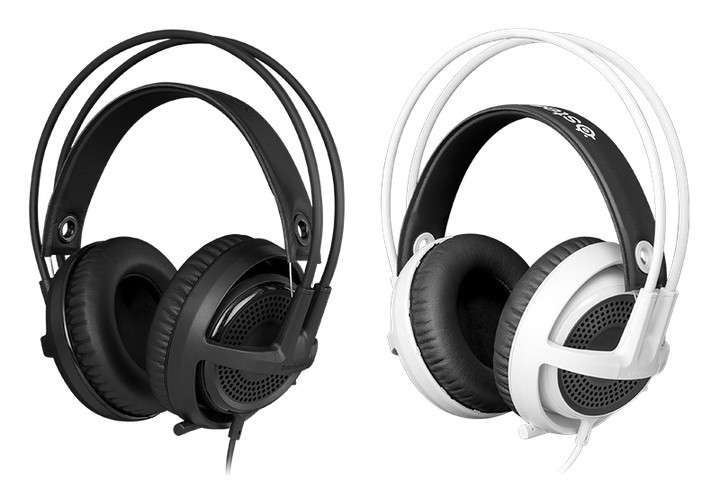
SteelSeries Siberia v3 - $99.99 / €99,99
At the heart of the family, the Siberia v3 Gaming Headset
leads the line-up with its iconic and insanely comfortable Siberia
suspension design. The audioscape has been competely redesigned with
next generation SteelSeries audio drivers. These drivers deliver rich,
detailed sound with powerful bass, and a wholly unique headset
construction, including noise-reducing memory foam ear cushions that
provide more sound isolation than ever before. The headset has a
single-plug cable along with a dual-jack extension for use on all types
of gaming devices from PCs to laptops, mobile devices and consoles.
Available in black or white, the new Siberia v3 truly advances the
features that have set this brand apart.
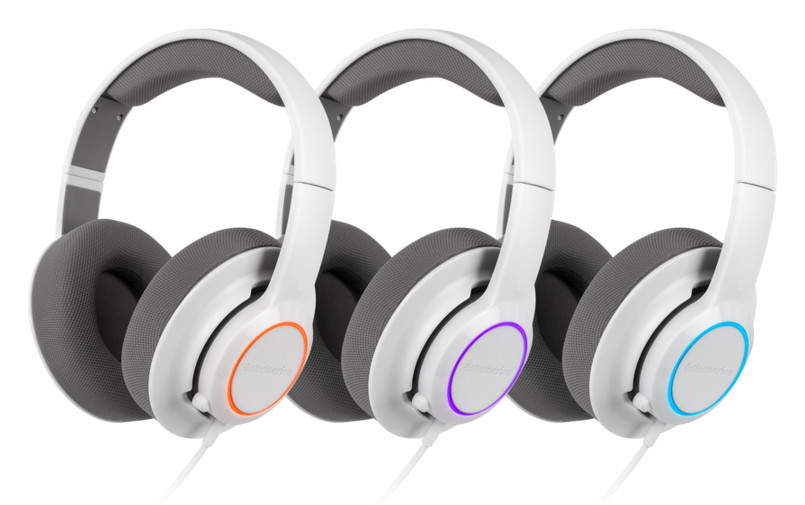
SteelSeries Siberia v3 Prism - $139.99 / €139,99
Radiating any of the 16.8 million color choices from its outer mesh-pattern earcups, the Siberia v3 Prism
joins the family and presents gamers with all of the comfort, features
and style found in the Siberia v3, but adds the personalized performance
and style features that SteelSeries Engine offers, including:
Unlimited profile settings that can be saved and accessed from anywhere via SteelSeries CloudSync
Microphone Noise Suppression and Microphone Auto Compression technologies optimize voice communication automatically
Digital audio quality with custom EQ
ColorShift illumination effects and modes that can be set by the user, or triggered by game sounds and events
Siberia Elite Prism - $199.99 / €199,99
We have upgraded our Siberia Elite to make the Siberia brand an even
more compelling choice for the most selective gamer. An entirely new,
slimmer microphone and an upgraded sound card improve the clarity of
what you hear - and how you are heard. Ear cushion fine-tuning makes the
headset even more comfortable, for longer gaming sessions than the
original. The Siberia Elite Prism
still delivers Dolby Headphone and Dolby Pro Logic IIx technologies for
up to a virtual 7.1-channel surround soundscape, customizable
illumination and audio settings, a swappable cable system for use across
PC, Mac, PS4 and mobile devices, all of which were a part of the
Siberia Elite platform launched last year. This upgrade represents our
commitment to never stop innovating, on even our top-of-the-line, fully
loaded products.
Siberia RAW Prism - $59.99 / €59,99
Lastly, we are proud to introduce an entirely new product designed to
make the Siberia brand even more accessible - to unlock great gaming
audio for a wider set of gamers than ever before. The new Siberia RAW Prism
is an economical gaming headset with a lightweight design and comfort
level worthy of the Siberia brand. Its SteelSeries speaker drivers push
out a full range of sound with crisp detail. Powered by SteelSeries
Engine software, gamers can customize and back up audio profiles, while
the illuminated ring on each earcup can be customized with 16.8 million
color options. A built-in microphone with Mic Auto Optimization
technology for clear voice communication resides on the left earcup,
along with an easily accessible microphone mute button. A USB connection
powers the Siberia RAW Prism, making it compatible with PC, Mac, PS4
and more.
Corsair, a leader in PC hardware, today launched Corsair Gaming, a new
division within the company dedicated to the elevation of PC gaming and
the development of high-performance PC peripherals. Forged from
Corsair's engineering know-how and developed alongside eSports
professionals and gaming enthusiasts, Corsair Gaming products are driven
by a philosophy of performance, style, and comfort. Corsair Gaming's
first salvo is the immediate worldwide release of the much-anticipated
range of RGB keyboards and mice.
"For 20 years, Corsair has equipped gamers with high-performance,
precision hardware to build their dream PCs. Corsair Gaming now
introduces new ways for PC gamers to optimize how they play," said Andy
Paul, Corsair President and CEO. "We've brought together our engineering
expertise and our passion for gaming to build a line of products that
delivers performance, customized for however you play."
K95 RGB, K70 RGB, and K65 Gaming Keyboards
With their color-customizable, 16.8 million color backlighting, the K95
RGB, K70 RGB, and K65 RGB are the headliners of the Corsair Gaming
brand. All three keyboards use only German-made Cherry MX RGB mechanical
key switches as part of an exclusive-to-launch partnership with Cherry.
Each key switch is built with the exacting precision of Cherry's
self-cleaning, corrosion-proof Gold-Crosspoint electrical contacts, and
with over five billion sold, Cherry MX mechanical key switches are the
premier choice of professional gamers and enthusiasts who demand
uncompromising reliability and performance. Combined with Corsair
Gaming's distinctive aircraft-grade aluminum baseplate, Cherry MX RGB
key switches deliver a professional-level gaming keyboard that ensures
both consistency and accuracy with the touch of every key.
The K95, K70, and K65 RGB keyboards exhibit Corsair's hallmark features:
sleek design, ultra-precision components, and sturdy aircraft-grade
aluminum construction that guarantee long-lasting performance.
Powerful Corsair Utility Engine (CUE) software enables the creation of
unlimited lighting effects and macros, from solid colors that can
highlight key groupings, to smooth gradients, dramatic waves and
captivating ripple patterns. These customization options let gamers
match their PC system lighting, find gaming keys faster, and provide
critical visual feedback for executing in-game objectives.
Corsair Gaming understands that gamers demand choice when it comes to
their hardware, so the K95, K70, and K65 RGBs cater to your every need -
including size. All three support complete macro programmability on any
key, with the K95 RGB offering an additional array of 18 dedicated
macro keys and dedicated media-keys. In contrast, the compact 10-keyless
K65 RGB removes the number pad and media keys for a desk-space-saving
design, while the K70 RGB offers the standard keyboard layout and media
keys that have already made its predecessor the choice for serious
gamers.
100% German-made Cherry MX RGB mechanical Red, Blue, or Brown key switches (K65 RGB available with Red key switches)
16.8 million multicolor per-key backlighting for virtually unlimited customization
Corsair Utility Engine (CUE) enables users to create and customize their own lighting patterns, animations, and macros
Aircraft-grade black anodized brushed aluminum for superior rigidity
100% anti-ghosting with full key rollover on USB
Onboard memory stores performance and lighting settings
Two-year warranty
K95 RGB: $189.99 MSRP
K70 RGB: $169.99 MSRP
K65 RGB: $149.99 MSRP (available exclusively from Best Buy in the US, and other retailers worldwide)
M65 RGB Gaming Mouse
The M65 RGB gaming mouse - available in black or white - continues
Corsair Gaming's focus on RGB color customization. This high-end gaming
mouse goes beyond the industry standard with built-in three-zone 16.8
million color backlighting. Housed on a durable aluminum unibody
chassis, the 8,200 DPI, gaming-grade laser sensor helps gamers make
their mark, with a sniper button ensuring the most critical of shots
stays on target. Charging the battlefield with a rubber-grip metal
high-mass scroll wheel, eight programmable buttons, and adjustable
weight turning zones, the M65 RGB mouse balances precise control and
intelligent tracking with innate comfort and style.
Three-zone backlighting with up to 16.8 million colors for virtually infinite customization
Custom-tuned 8,200 DPI gaming-grade laser sensor for pixel-precise tracking
High-capacity Omron switches rated for 20 million clicks for years of precise triggering
Aircraft-grade aluminum baseplate for light weight and durability
Adjustable weight system helps set the center of gravity to match play style
Eight strategically placed buttons, including a dedicated sniper button with improved positioning
On-the-fly DPI switching to instantly match mouse speed to gameplay demands
Two-year warranty
$69.99 MSRP
H2100 and H1500 Headsets
The Corsair Gaming H1500 and H2100 Headsets are part of Corsair's new
line of high-performance gaming equipment. Joining the K95, K70, and K65
RRB Keyboards and M65 RGB Mice, the H1500 and H2100 Headsets fully
immerse gamers - and their ears - in battle. In both wired and wireless
options, the Corsair Gaming Headsets offer Dolby 7.1 surround sound for
accurate positional audio that captures the acoustic environment of
every moment of gameplay. The H1500 keeps gameplay closer to the system,
while the H2100 enables gamers to play for over ten hours with up to 40
feet of unrestricted movement, combining epic audio and optimum comfort
without the hassle of wires.
Genuine Dolby 7.1 surround sound for complete immersion
Micro-fiber wrapped memory foam earpads for comfortable gaming sessions
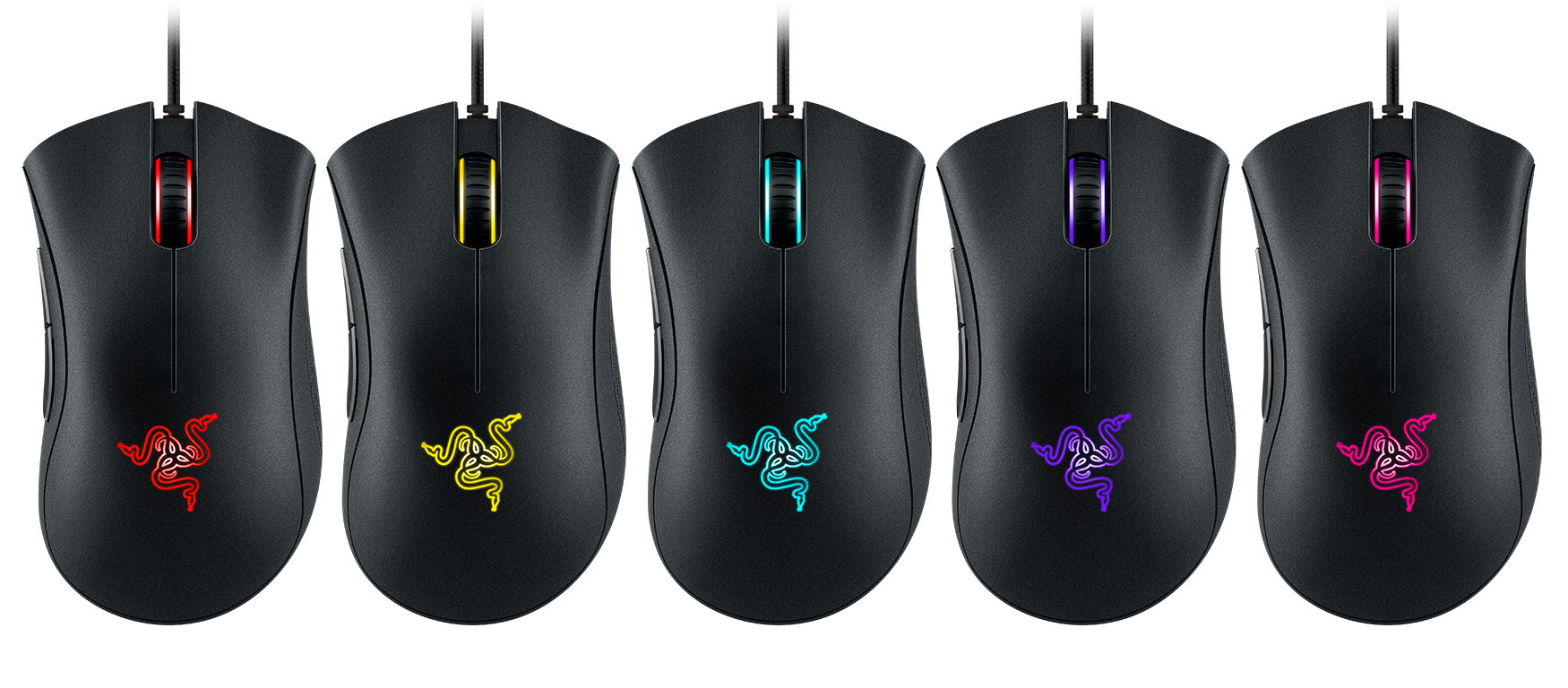
Razer, a world leader in connected devices and software for gamers,
today announced the launch of the Razer DeathAdder Chroma gaming mouse.
The Razer DeathAdder Chroma features the renowned ergonomic design of
its precursor. It is equipped with a 10,000 DPI optical sensor that is
able to track lift-off distance as precise as 1 mm on most surfaces,
including glass table tops. The upgraded sensor is capable of mouse
movement speeds up to 200 inches per second with 50 G acceleration,
ensuring exacting accuracy and organic fluidity onscreen.
Together with Razer Synapse: Stats & Heatmaps, the Razer DeathAdder
Chroma provides gamers precise details such as game time, button
presses, distance moved and even how much overall pressure was exerted
while gaming. This incredible amount of technical tracking data coupled
with the upgraded ultra accurate sensor allows gamers to tweak the Razer
DeathAdder Chroma to their individual play style and further increase
their accuracy more than with any other mouse on the planet.
"The Razer DeathAdder Chroma is the world's best gaming mouse favored by
eSports athletes everywhere," says Min-Liang Tan, Razer co-founder and
CEO. "Our Synapse software continues to add value to our hardware
products, and this is the latest example of that. Validated by
professional eSports athletes, the iconic ergonomic design and the
ability for gamers to hone their accuracy make the Razer DeathAdder
Chroma the perfect mouse for any play style."
The DeathAdder Chroma joins the BlackWidow Chroma and Kraken 7.1 Chroma
that come with the option of 16.8 million customizable colors and a
range of effects through Razer's cloud-based hardware configurator Razer
Synapse. Chroma allows the device to sync lighting colors and patterns
and comes with an open SDK that enables game developers to integrate
advanced lighting effects based on in-game events such as a base being
under attack and much more.
Product features
Ergonomic right-handed design with textured rubber side grips
10,000 DPI optical sensor
Chroma lighting with 16.8 million customizable color options
Razer Synapse enabled
5 Independently programmable Hyperesponse buttons
1000 Hz Ultrapolling
On-the-fly sensitivity adjustment
Always-on mode
200 inches per second / 50 G acceleration
Gold-plated USB connector
2.13 m / 7 ft., lightweight, braided fiber cable
Approximate size: 127 mm / 5 in. (Length) x 70 mm / 2.76 in. (Width) x 44 mm / 1.73 in. (Height)
Microsoft is all set to officially unveil Windows 9 at a special event on September 30
— and so we thought it would be a good time to run through everything
that we already know about Microsoft’s new operating system. Most of
these features and changes are reliably sourced from people close to the
development of Windows 9 or from leaked builds of the Windows 9
Technical Preview. We’ll also update this story with an official list of
Windows 9 features when Microsoft starts releasing public beta builds
next week. In short, if you want to find out about Windows 9, this is
the place to be.
After the very poor response to Windows 8, and
the bitter taste it left in the mouths of millions of users, Windows 9
is a very important release for Microsoft. On the one hand, it needs to
rectify Windows 8′s wrongs and offer normal PC users a reason to upgrade
from Windows XP or 7. On the other hand, Microsoft continues to lose
ground in the mobile sector as well. Windows 9 will actually have to be
the jack of all trades, rather than Windows 8′s rather ignominious
status as the master of none. How will Microsoft do this? Well, let’s
take a look.
Windows 9 for desktop and laptop users
The Start menu returns.
After a few years of claiming that the Metro-style Start screen was
just as good for mouse-and-keyboard use as touchscreen use, Microsoft
has finally backed down. Windows 9 will have a Start menu
on the Desktop; the left side will look a lot like the standard Windows
7 Start menu, but the right side will have the option of being
populated with Metro-style live tiles. The left side of the menu will
adopt a new Metro-like look, too — though you may be able to configure
it to look like the good ol’ Windows 7 Start menu.
Virtual desktops. In Windows 9, you will have the option of using virtual desktops.
Right now you just have one desktop per monitor — but with virtual
desktops, you can switch between as many desktops as you like. This is a
popular power user feature that has been present on some Linux window
managers and via third-party Windows tools for years — but now it’ll be
native in Windows 9.
Metro apps on the Desktop.
Rather than forcing you into the full-screen Metro interface, Windows 9
will let you run Metro apps on the Desktop in a window. In theory this
will mean that mouse-and-keyboard users might now actually use Metro
apps, which in turn might kickstart the arrival of some better apps in
the Windows Store. Or not.
Windows 9 Desktop, showing a new, very flat Explorer (note the new icon too)
Desktop interface overhaul.
It’s not entirely clear yet, but it seems the Windows 9 Desktop will
receive a graphical overhaul, to make it even flatter. The leaked
Windows 9 Technical Preview shows some flatter icons and thinner window
borders — and I suspect we’ll see some further UI changes in later
preview builds. (If you recall, the first Windows 8 Developer Preview
still looked a lot like Windows 7, and became more flat and less opaque
as the development process went on.) Curiously, there does appear to be a
drop shadow behind the Explorer window in the Windows 9 screenshot
above — Windows 8 got rid of a lot of shadows, so it would be
interesting if they made a return.
The Metro interface may be removed.
In the last few months, there has been rumblings from Redmond that the
Windows 9 experience might be formally split in two: A Metro-only
experience for touchscreen/tablet users, and a Desktop-only experience for mouse-and-keyboard users.
One of the biggest complaints of Windows 8 is the way it forces you
into the Metro interface when you’re using a mouse and keyboard, and the
Desktop interface when you’re using a touchscreen. It isn’t clear if
the Metro interface will be removed entirely from “Windows 9 for the
Desktop” — more realistically, to cater for users of hybrids and
touchscreen laptops, there’ll just be a check box somewhere for “never
show me the Metro interface.”
Lots of other tweaks to the Windows 9 Desktop.
In addition to all of the above, the Charms bar is also being removed
(from the Desktop interface at least; it might hang around on
touchscreen devices). The Technical Preview has a Notifications
panel that pops up from the bottom right corner (video above), though I
don’t think this is its final format or placement. There will also
likely be tweaks for multi-monitor and high-res (hi-dpi) setups, too.
Windows 9 for touchscreen tablet/hybrid users
So
far, we know relatively little about the Windows 9 experience for
tablet, touchscreen, and hybrid users. It is likely that the Desktop
will be removed (or at least made very hard to access) so that
touchscreen users only have to interact with the Metro interface. It
would make sense if Microsoft made it so tablet/touchscreen users never
had to venture out to the Desktop to access the Registry Editor or
Control Panel (both of which are hard to use without a mouse and
keyboard).
Here are some other possible tweaks to the Metro side of things:
The Cortana digital assistant is making the jump from Windows Phone.
Cortana, Microsoft’s answer to Siri, will reportedly be coming to
Windows 9. She will probably be accessible from both the Desktop and
Metro, but presumably her ability to understand natural language will be
more useful for people on the move, or without a keyboard. If
Cortana is capable of understanding (and executing) complex filters, she
could be a very useful addition to Windows 9. (Imagine being able to
say “Cortana, show me all of my photos from my 2011 trip to Mexico.”)
Start screen tweaks.
While the Start screen will still look much the same in Windows 9, many
of its elements will be tweaked. Live tiles — the big, resizable icons
that show updates and notifications — will be reportedly be upgraded, so
that you can actually use some features of an app from the tile,
without having to open it up. Live folders from Windows Phone 8.1 Update
1 may also make the jump to Windows 9. Notifications.
While the leaked Technical Preview has a Notifications tray on the
Desktop, I suspect the final version of Windows 9 will have some kind of
Notifications panel in the Metro interface as well — probably
resembling the Notifications panel from Windows Phone 8.
One Windows: Windows for all, Windows Phone, etc.
Windows 9: Other general updates, tweaks, and rumors
In
addition to forward-facing UI changes to the Desktop and Metro, Windows
9 will of course have lots of under-the-hood changes. The most notable
so far seems to be one-click upgrading: With Windows 9, upgrading to the next version (Windows 9.1, Windows 10) should be a simple matter of clicking one button.
Will Windows 9 be the last major version of Windows?
Coincidentally, the change to a one-click upgrade cycle also suggests
that Windows 9 will be the last major version of Windows (at least for a
while). Microsoft has been trying to shift its sizable bulk towards a
faster release cycle over the past couple of years, so that Windows and
Windows Phone can evolve more rapidly — just like iOS, Android, and OS
X. One-click upgrades would be a sure sign that Windows 9 is moving away
from major overhauls and towards smaller, iterative updates like OS X.
A possible (but unlikely) Windows 9 logo
What will Windows 9 be called? There has been some discussion about whether Windows 9 (codenamed Threshold) will actually be called Windows 9, or whether Microsoft will instead call it just Windows or maybe Windows One.
Just yesterday, however, the head of Microsoft’s France operations said
that the company would be releasing “Windows 9″ at the September 30
event in San Francisco. Microsoft’s PR team quickly backpedaled, saying
the next version of Windows “at this stage does not have a name as
such.” Hmm.
Universal Windows apps. In theory, we should begin to see the arrival of truly universal Windows/Windows Phone apps on Windows 9.
It still isn’t entirely clear what Microsoft’s vision for universal
apps is, but I suspect we’ll hear more about it at the September 30
event. The idea of buying a single app and running it across all of your
Microsoft devices (including the Xbox One) is rather sweet, but I think
it depends on…
Microsoft Windows 9 event, September 30
… the merger of Windows Phone and Windows RT. So
far, despite the leak of the Windows 9 Technical Preview a few weeks
ago, we know very little about the Metro interface. One possibility is
that the Windows 9 Technical Preview is actually just for mouse and
keyboard users, and that Microsoft is working on another preview build
for mobile devices. This ties in neatly with a rumor that Microsoft is
currently working on merging Windows Phone with Windows RT.
We’re
sure there will also be lots of other underlying improvements to Windows
9 — little tweaks, support for new kinds of hardware, improved high-DPI
support — but we won’t discover them until we actually get our hands on
the Windows 9 Technical Preview. Stay tuned: The September 30 unveil of
Windows 9 is now just a few days away.
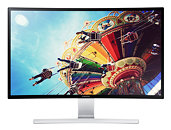
Samsung Electronics introduced the 27-inch S27D590C Full HD Curved
Monitor designed to enhance visually compelling entertainment content.
The advanced display creates a more immersive viewing experience through
its curved design and innovative features.
"Our new, 27-inch curved monitor takes movie watching and gaming to new
heights from the monitor's unique curved screen and comprehensive
entertainment features, to the incredible picture quality and the
impressive sleek design," said Seoggi Kim, Senior Vice President of
Visual Display Business at Samsung Electronics. "The S27D590C embodies
our singular focus to create a truly unforgettable entertainment
experience." Ultimate Viewing Experience
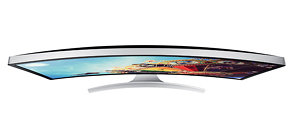
The curvature of the S27D590C improves the viewing experience in
comparison to traditional flat screen monitors as the screen boasts
nearly uniform viewing distances from the center of the screen to its
edges. This curvature matches the natural curve of the human eye and
makes it easy for the viewer to completely immerse themselves in games
and movies.
Additionally, the screen's curvature creates a wider field of view and
greater sense of depth, which enables viewers to enjoy a panoramic view
and gives the screen a 3D-like effect. The 3D effect is particularly
apparent when enjoying first-person perspective games, such as racing
and flight simulators, avatar-based adventures and shooters.
With an ultra-wide viewing angle of 178 degrees both horizontally and
vertically, the curved monitor's vertical alignment (VA) panel optimizes
the viewing experience from any position and minimizes picture
distortion. In addition, the S27D590C's Mega Dynamic Contrast Ratio
technology delivers a high contrast ratio of 3000:1 and 350 cd/m2
brightness help produce life-like images with deeper blacks, pristine
whites and brighter colors.
Optimized for Entertainment
The integration of enhanced entertainment features takes gaming and
multimedia content experience to the next level. The monitor comes fully
equipped with built-in 5-watt dual speakers that deliver high-quality
stereo sound as well as a game mode function that can be quickly
activated with a simple touch of a button. The game mode intelligently
detects on-screen changes and corrects blurry images, enhances colors
and alters contrast for improved visibility of in-game action.
The monitor has a clean and minimalist look, ensuring viewers enjoy the
enhanced viewing experience of the curved screen without any
distraction. Its sophisticated design makes pictures seemingly float in
mid-air, captivating the viewer instantly. Users can also easily adjust
the screen angle using the tilt screen function to minimize glare and
reflection. The monitor also supports 100×100 mm VESA standard brackets
for stress-free wall or table mounting.
When Haswell replaced Ivy Bridge last year it came accompanied by Intel's 8-series chipset. Codenamed 'Lynx Point', the Z87 flagshipoffered broader SATA 6Gb/s support, more USB 3.0 ports, and did so while consuming almost 40% less power.
It had been expected that the Z87 chipset would see the Haswell range out, but this June delivered a Haswell refresh and along with some rebadged CPUs we got the new 9-series chipset and a successor to the Z87. Codenamed 'Wildcat Point', the new Z97 was virtually identical to its predecessor with a few exceptions.
The most noteworthy change was support for future Broadwell CPUs, which should arrive during the coming holiday shopping period. In addition to compatibility with future processors, the Z97 brought SATA Express as well as the M.2 socket (briefly known as NGFF or the next generation form factor after mSATA).
M.2 is a specification for internally mounted storage and add-in cards. First designed for mobile devices, the M.2 interface has found its way into desktops and the new Z97 and H97 chipsets have played a big role in speeding up its adoption as a replacement for mSATA, which uses the PCI Express Mini Card physical layout.
Having a smaller and more flexible specification together with more advanced features, the M.2 is better suited for solid-state storage applications in general, especially when used in small devices like ultrabooks or tablets.
SATA Express is less promising in our opinion as it doesn't currently have supporting SSD devices. Whereas the M.2 socket is typically shared with one SATA 6Gb/s port, the SATA Express interface takes two SATA 6Gb/s ports and requires a third smaller port which deals with PCI-Express based communications.
With over 90 motherboards available right now using the Z97 chipset, picking the right one can be a difficult decision. Hoping to narrow the search down, we have taken seven popular boards and compared them in just about every way possible.
We've included a total of seven boards from Asus, Asrock, EVGA Gigabyte and MSI in this roundup. Check out the comparisson table below for a quick glance at the features offered by each or skip to the respective page for a more detailed rundown.
NVIDIA is doing the scientific community a great service by code-naming
its GPU architectures after pioneering physicists. "Kepler" became
synonymous with the GeForce GTX 680 launch back in 2012; and although it
got its debut with the mid-range GeForce GTX 750 Ti earlier this year,
"Maxwell", NVIDIA's latest GPU architecture, is really beginning to
unravel with the new GeForce GTX 980 and GTX 970 we are reviewing today.
The development cycle of GPUs isn't too different from that of CPUs. A
new GPU architecture is introduced every two or so years, facilitated by
a new silicon fab process, which allows designers to cram in more
transistors, to up performance. The common foundry partner for both
NVIDIA and AMD, TSMC, threw a spanner into the workings of this cycle
when news broke of delays in the implementation of its 20 nanometer
manufacturing node, successor to the 28 nm node on which NVIDIA's
GeForce Kepler and AMD's "Volcanic Islands" families of GPUs were built.
NVIDIA probably had to redesign the performance-segment GPU based on
its swanky new "Maxwell" GPU architecture for the existing 28 nm node.
Its fruition is the GM204, the 5.2 billion transistor chip at the heart
of the GeForce GTX 980 and GTX 970.
With the introduction of the GeForce GTX 980 and GTX 970, NVIDIA's
product stack looks very similar to the way it did in 2012, in which the
performance-segment GK104 went into making the GTX 680 and GTX 670,
positioned as high-end parts because of their relatively higher
performance to AMD's high-end chips at the time. Much like "Kepler" and
GK104, "Maxwell" and GM204 boast leaps in performance-per-watt and
overall performance. However, those two facets aren't Maxwell's only
propositions. NVIDIA announced a bucket-list of innovations in
consumer-graphics technologies, such as support for Microsoft's
next-generation DirectX 12 API, Dynamic Super Resolution, Multi-Frame
Sampled AA, Voxel Global Illumination, and VR Direct. Such is NVIDIA's
confidence in the superiority of its "Maxwell" architecture, that it
thinks a 28 nm chip with 165W TDP can outperform "Kepler" based chips on
the same 28 nm process with a 50 percent higher TDP.
The GeForce GTX 980, hence, is NVIDIA's newest high-end single-GPU
graphics card, by possible virtue of its performance. It is priced at US
$549, which is $100 cheaper than the GeForce GTX 780 at launch, but $50
more than the GTX 680 at its launch. The GeForce GTX 970, on the other
hand, is a high-performance offering priced at $329. With the
introduction of these two, NVIDIA announced the discontinuation of the
GeForce GTX 780 and GTX 770 from the product stack. The GTX 760 even
sees a price-cut that puts it at $219. NVIDIA priced the GTX 980 to lock
horns with AMD's R9 290X, and the GTX 970 is slotted to compete against
the R9 290. Will they succeed?
 Lenovo today announced more choice for consumers with the expansion of
its popular YOGA line of tablets with the new YOGA Tablet 2. Consumers
can now for the first time choose Windows models, available in 8-in and
10-in sizes. Lenovo is also offering new Android models in 8-in and
10-in models with the new 13-in YOGA Tablet 2 Pro.
Lenovo today announced more choice for consumers with the expansion of
its popular YOGA line of tablets with the new YOGA Tablet 2. Consumers
can now for the first time choose Windows models, available in 8-in and
10-in sizes. Lenovo is also offering new Android models in 8-in and
10-in models with the new 13-in YOGA Tablet 2 Pro.


 Today SteelSeries, the leading global manufacturer of gaming
peripherals, announced the all new Siberia headset family. With the
introduction of these six new Siberia headsets, SteelSeries now delivers
the most comprehensive suite of gaming audio solutions to fit the needs
of any gamer. Each Siberia headset is built on SteelSeries
world-leading standards for amazing comfort, great audio and
breakthrough design. But the breadth of this new range allows each and
every gamer to unlock amazing new experiences tailored to exactly what
the gamer is looking for in a gaming headset.
Today SteelSeries, the leading global manufacturer of gaming
peripherals, announced the all new Siberia headset family. With the
introduction of these six new Siberia headsets, SteelSeries now delivers
the most comprehensive suite of gaming audio solutions to fit the needs
of any gamer. Each Siberia headset is built on SteelSeries
world-leading standards for amazing comfort, great audio and
breakthrough design. But the breadth of this new range allows each and
every gamer to unlock amazing new experiences tailored to exactly what
the gamer is looking for in a gaming headset.